
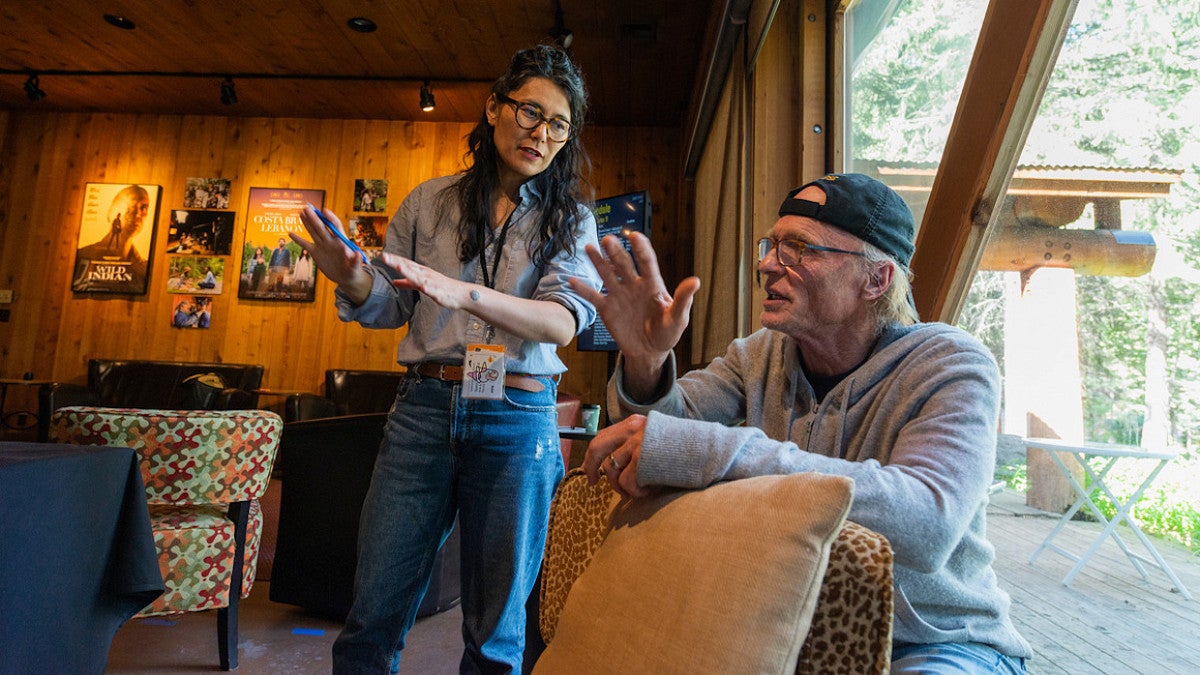
The idea began with a single object: an abandoned TV in a field. For filmmaker and cinema studies associate professor Masami Kawai, the sight was so unexpected that it stayed with her. That moment eventually became the inspiration for “Valley of the Tall Grass,” an Indigenous-centered feature film she is currently developing and shooting in Eugene, Oregon.
“I'm originally from Los Angeles, so moving to Eugene was such a different environment. I literally saw a TV — an abandoned TV in a field — and it was just this contrast of an interesting object in a rural-ish space that was intriguing,” she said.
Over the years, that moment transformed into a multilayered story shaped by her experience living in Eugene and her deepening connection to Kalapuya land, the Indigenous land on which the University of Oregon is built. Kawai said that learning about the Kalapuya people helped her reconnect with her own Indigenous roots as a Ryukuan person from Amami Oshima, one of the southern islands of the old Ryukyu archipelago in Japan. Shaped by centuries of shifting control, from regional kingdoms to the Shimazu Clan to US occupation, Amami is now part of Japan. Kawai’s heritage and this history helped shape the heart of the film, which follows the journey of an old TV/VCR as it moves from person to person across Eugene. Through interconnected vignettes, the TV becomes a vessel for memory, loss, family bonds and quiet forms of resilience among the working-class Indigenous characters who encounter it.
What it takes to make a feature film
Successfully making a feature film requires two important things: funding and a team. Kawai has spent years securing funding.
“Securing funding has involved just applying for one grant after another,” she said. “There’s a lot of rejection along the way, but once you get one, you build momentum.”
Kawai has received grants from multiple sources including UO Trustees, Tribeca Untold Stories, The Walt Disney Company Project Advancement and Completion Fund, Oregon Humanities, and multiple under the Sundance Institute umbrella, including the Sundance Indigenous Fund, Sundance Directors Lab, Sundance Screenwriters Lab and Sundance Film Fund. She credits her producers for supporting the grant process — and experienced lead producer Sophie Luo, who now oversees budgeting and production logistics.
As for a team, she now has a lead producer, executive producer, associate producer, cinematographer and casting directors. She is currently in talks with production designers and begins the search for a costume designer next. The full team will be assembled next year as the film moves toward its 2026 shoot.
A feature film is always evolving
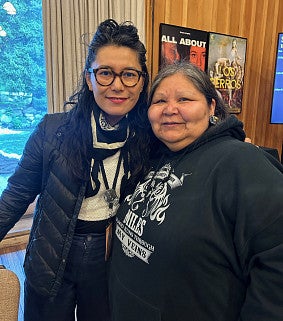
A major turning point came when Kawai workshopped a scene at the Sundance Directors Lab — a selective, hands-on bootcamp where emerging directors rehearse and shoot key scenes with professional actors. There, she collaborated with Elaine Miles (“Northern Exposure,” “The Last of Us”). She was such an anchor for the non-professional actors and helped me develop specific details about the role. It was through that process that she said she would love to be part of the project,” Kawai said.
Another important character in the film is its location, Eugene. Kawai is committed to filming in Eugene — despite the higher cost of housing cast and crew — because the city’s landscape is visually and culturally irreplaceable.
“I didn’t realize how distinct Eugene was from other towns in Oregon,” she said. “I figured I could find the same mix of urban, suburban, industrial and rural, but it’s actually harder to find that mix outside of Eugene.”
She points to the sprawl, the lack of population density, the wildness of the creative Whiteaker neighborhood, the skate park under the freeway, train tracks cutting through the city and two rivers running through Kalapuya land.
“It tells a particular story through the landscape, and it wasn’t easy to transpose onto another city,” she said. “Covering housing costs was worth it for the production value Eugene could provide.”
Film students will gain experiential learning opportunities when cameras roll
A differentiating factor for the Cinema Studies department in the College of Arts and Sciences is its distance from Hollywood and its embodiment of the Pacific Northwest characteristic of independent thinking, including in filmmaking.
As a professor, Kawai lets students see not just the polished outcomes of filmmaking but the labor behind them. As she works on developing her film, she will bring students along on the journey with her, providing them with direct experience and insights into all areas of the filmmaking business.
“I want them to get a feel for what it means to be working on set,” she said.
There are many roles to be filled in the filmmaking industry and seeing the process unfold, participating in it as it’s possible, getting hands-on experience, all gives students a better idea of what roles they may prefer. Learning from professors, participating in the Harlan J. Strauss Visiting Filmmaker Series and securing internships are all ways the Cinema Studies department encourages students in their independent pursuits.
Making art is often fun and bittersweet
After nearly seven years of development, Kawai is excited to begin production and witness “the amazing alchemy that occurs on the set.” The film is scheduled to shoot in summer 2026, complete post-production in 2027 and then begin its festival run before community screenings across Oregon.
Ultimately, Kawai wants audiences to experience both joy and reflection. “I want audiences to have a fun ride but also be left with a bittersweet feeling — a tenderness but also a sense of loss,” she said. She hopes viewers spend time with characters who are rarely centered, including Mexican Indigenous people, two little Cayuse Native American sisters and a Ryukuan artist, and think more carefully about the meaning of everyday objects.
“Valley of the Tall Grass” is both a personal journey and a community-centered story that expands the landscape of Indigenous filmmaking and invites audiences to consider the stories, people and objects we too often overlook.
“In Amamian culture, there’s a great belief in objects and this animism of objects having a life of their own,” she said. “I want one of the takeaways to be for us to just take a little more care with objects and consumption.”
—By Harper Wells, College of Arts and Sciences