
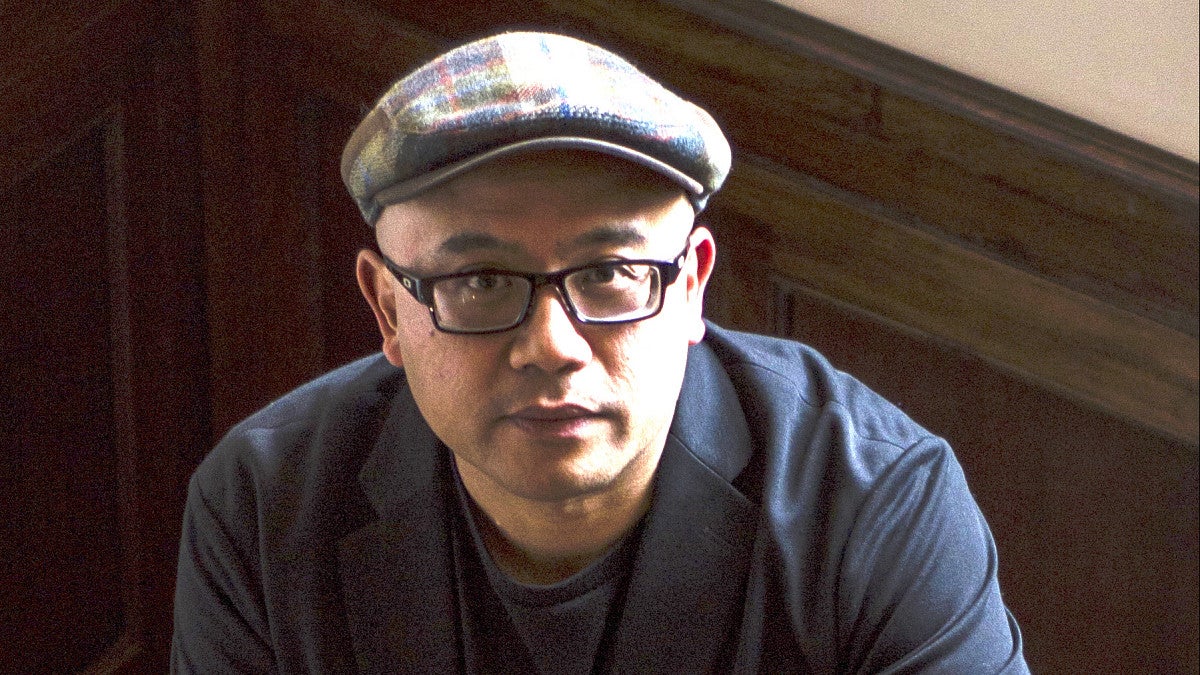
—Lysley Tenorio, MFA ’98 and Fiction Writer
When he first began college, Lysley Tenorio, MFA ’98 (creative writing), didn’t know what else to study other than English. As he moved his way through undergraduate creative writing workshops in Berkeley, then up the Pacific Coast to pursue a master's degree in Eugene, Tenorio discovered fiction writing was what he absolutely had to do.
Throughout his decorated career as a fiction writer, Tenorio has authored “Monstress,” a short story collection, as well as the novel “The Son of Good Fortune,” both published by Ecco/HarperCollins. His work has appeared in many respected magazines such as The Atlantic and Zoetrope: All-Story, and his work has also been adapted for the stage in San Francisco and New York City. He has been awarded multiple fellowships and awards from institutions across the world, including The American Academy in Rome and the Radcliffe Institute at Harvard University. He is currently an associate professor in The Writing Seminars at Johns Hopkins University.
Tenorio spent some time answering questions about his experience in the creative writing field and his time at the UO. As an accomplished writer and professor on both coasts, he offered valuable career advice for anyone interested in writing.
What originally inspired you to pursue degrees in the humanities?
I became an English major in college because, frankly, I didn’t know what else to study. I crossed my fingers, hoped it might lead to something good. But when I started taking creative writing workshops my junior year, something clicked: what I read directly inspired what I wanted to write. Suddenly, my English major wasn’t just about getting my bachelor’s degree. It was about what I wanted to do with my life, which was write.
Pursuing a master of fine arts in creative writing was a way to determine how serious I was about writing. If given two years to study writing, could I develop a practice? A commitment to that practice? Would writing fiction feel vital, the thing I absolutely had to do? By the time I finished my MFA the answer, thankfully, was yes.
What about the UO master of fine arts program interested you? What differentiated this program from others and convinced you to attend the UO?
I wanted to work with Chang-rae Lee, a professor in the program at the time, as well as an alum of the program. His first novel, “Native Speaker”, was the kind of book I’d never read — an immigrant/spy story — and in my gut, I felt I could learn from him. I was right. I was also drawn to the program’s small size and, of course, the generous funding. I like to say that the UO saved me $60,000 in tuition (which I would’ve paid had I gone to the one other school that accepted me).
During your time at the UO, were you involved in any clubs or student organizations on or off campus? If so, what were they and how did they shape your experience?
I don’t know if it still exists, but I joined Absolut Improv, the campus’ improv group. Improv requires an entirely different set of skills from writing fiction, but both share essential elements of building narrative, generating surprise and finding a way to entertain your audience.
What stands out about the creative writing/fiction program at the UO?
The place and the people. Coming from the Bay Area, Eugene felt like an idyllic college town — so many trees! cheap drinks! Smith Family Bookstore! — and was the perfect environment in which to read, write and think.
And I loved my classmates in the program. The idea that we all left our lives and came together in Eugene, simply because we wanted to become writers—I find that really moving, especially in these rough times we’re living in now. I don’t really see my classmates anymore, but I think of them often, and that time we spent together. It was incredibly special.
What was the most useful bit of knowledge you learned at the UO that continually applies to professional life?
It’s about language. Chang-rae Lee taught me that and it’s stayed with me ever since, both as a writer and a teacher.
Speaking of professional life, where did you start your professional career after graduating from the master’s program?
After grad school, I hopped around the country doing writing fellowships — New Hampshire, Wisconsin, New York — anyplace that would provide time to write. A Stegner Fellowship at Stanford brought me back to the Bay Area and soon after, I joined the English faculty at Saint Mary’s College, where I taught from 2003 to 2022. I’m now an associate professor in The Writing Seminars at Johns Hopkins University.
Between fellowships, teaching positions, and being a writer, you have years of experience teaching in a classroom and producing written stories. What has been your favorite career role so far and why?
Fellowships have been one of the best surprises about pursuing writing. Who knew you could live for a year in Rome or at Harvard and work alongside architects, scientists, composers, painters, etc. But it’s pretty much impossible to make that a full-time career, so I’m grateful that I have a job — teaching — that supports my other job — writing. I can’t extricate one role from the other.
Do you have any advice for students interested in pursuing a career in creative writing?
Passion and talent are absolutely essential but not enough. To pursue a career in creative writing, or any kind of art, you have to embrace the fact that art is work, real labor — sometimes mundane, occasionally lonely, always challenging. But when you can make it happen — a perfect sentence, an absorbing scene, a book you can stand 100% behind — it is, unquestionably, worth it. Just make sure you can pay your bills and get health insurance, because you still have to live in the world.
–By Gretchen Scheck, College of Arts and Sciences