
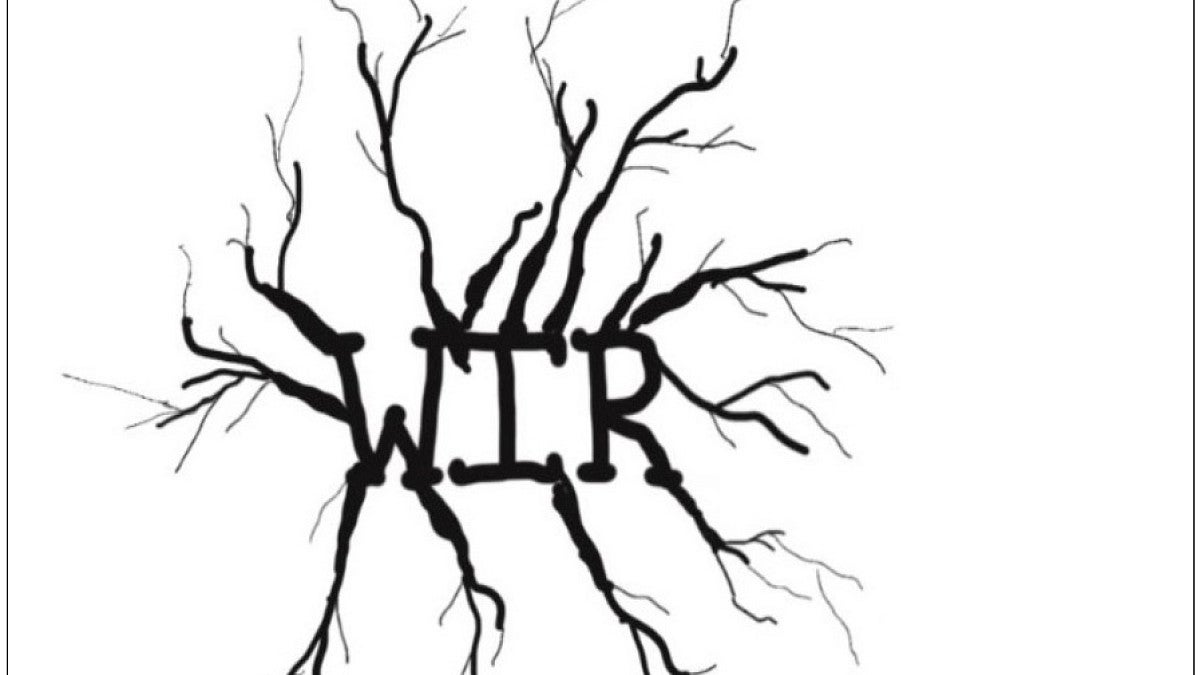
You can’t talk about Franz Kafka without talking about existential dread, making this year’s issue of Konturen focused on him appropriate.
Konturen is an interdisciplinary journal that explores how borders, boundaries and defining figures are perceived across varying fields in the humanities. Each issue of Konturen is released biyearly, including theme-specific papers written by scholars from various locations of study. For as long as the journal has existed, it also tries to reach readers who are not narrowly focused on German literature.
For the 2026 issue of Konturen, the theme is Franz Kafka. Marking two years after the centennial of Kafka’s death, this issue aims to both analyze his work through uniquely modern lenses and to acknowledge new and exciting work being done on a writer as famous as Kafka. While covering a specific writer could be considered a fairly traditional way of theming a journal, for Konturen, it’s uncommon and hasn’t been done before.
Franz Kafka is regarded as one of the most prominent modern literary writers in German speaking history. His written legacy has prompted discussion over the years, and it continues to be reviewed and analyzed today. One recent example comes from a journal of the German and Scandinavian studies department in the College of Arts and Sciences.
“We are an interdisciplinary German studies journal, and this particular issue is pertinent since Kafka is one of the most well-known 20th century writers of the German language,” said Professor and Konturen Editor Martin Klebes . “That in itself is a good reason to see what new and valuable scholarly work is being produced on this particular writer.”
Each of the papers included in this issue elaborate on the significance of Kafka’s work, including his novels, diaries, and even his correspondence, that, in the eyes of the editor, should be shared with a larger audience.
“So much has been written on the work of certain writers like Kafka, whereas other writers are barely known,” said Klebes. “Do we need more interpretive work on a writer, justifiably, as famous as Kafka? The quality of work included in this journal says yes.”
Though this journal originated in the German and Scandinavian department of the CAS, the value of the journal extends beyond this subsection of humanities. Anyone intrigued by discussions held within this department can join the discourse of Kafka or German and Scandinavian studies, whether they’re part of this major, are outside of the University of Oregon, or are simply curious about what it means.
Scholarship, at times, can appear specialized and niche. This journal looks to connect with people, especially those outside the German and Scandinavian studies, who want to learn more about work done inside the discipline.
For example, the first entry written by Evan Parks opens the idea of how to begin reading Kafka. Specifically, it analyzes how to read a one or two sentence aphorism written by Kafka, as well as how to teach students to read even the shortest of texts while still understanding all that it implies. To Klebes, this contribution is the perfect entry to this issue, helping readers find a way to interpret Kafka before moving to longer contributions that deeply dissect his work.
— By Gretchen Scheck, College of Arts and Sciences